
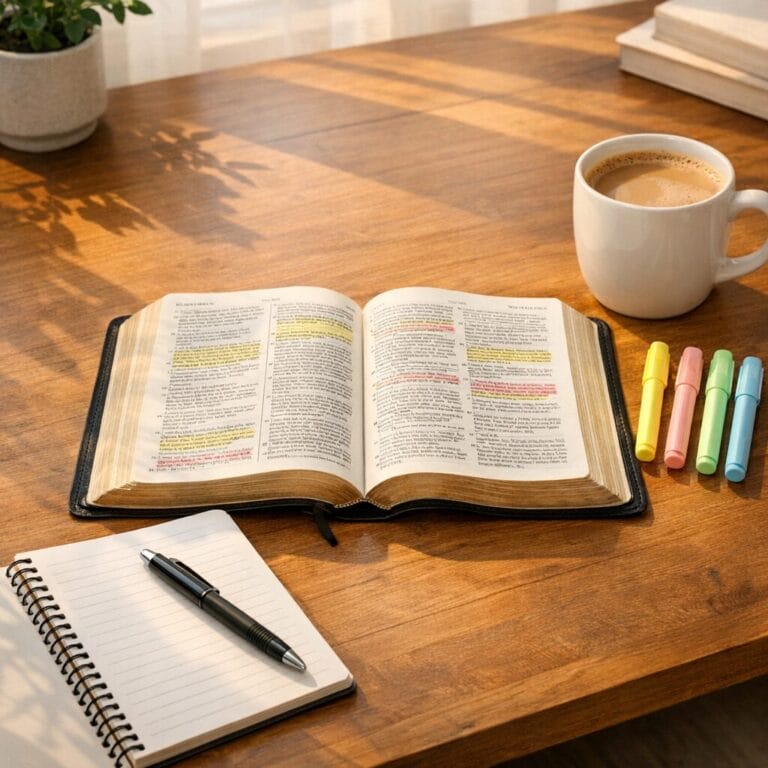
Many Christians want to understand Scripture more deeply but are not sure where to begin. Learning how to study the Bible does not require a seminary degree or a shelf full of books. It starts with a simple plan, a teachable heart, and the willingness to slow down and listen. As you grow in understanding the logos bible message, you begin to see how each passage reveals God’s character, His purposes, and His call on your life. With a few practical methods and the right tools, deeper Bible study can become a steady and life-giving habit.
Why learning how to study the Bible matters
Difference between reading the Bible and studying the Bible
Reading the Bible and studying the Bible are related, but they are not the same. Reading helps you take in the big picture, stay familiar with God’s Word, and build a daily rhythm. Studying goes further. It asks questions, notices details, and seeks to understand what the text actually means.
In simple terms, reading says, “What does this passage say?” Studying asks, “What does this passage mean, and how should I respond?” Both matter, but study helps move truth from the surface into the heart.
How Bible study builds understanding, conviction, and consistent spiritual growth
When you study Scripture carefully, you begin to recognize repeated themes, understand doctrine more clearly, and see how the whole Bible fits together. This strengthens conviction because your faith is rooted in what God has said, not just in passing inspiration. Over time, regular study also shapes your decisions, prayers, and relationships. That is one reason deeper Bible study is such an important part of spiritual maturity.
Common obstacles beginners face when trying to study Scripture
Many beginners feel overwhelmed by unfamiliar names, difficult passages, or uncertainty about where to start. Some struggle with consistency. Others rely only on outside teachers because they do not feel confident studying on their own. These challenges are common, but they can be overcome with a simple method and realistic expectations.
How to prepare for Bible study
Choose a quiet place, a Bible translation, and a consistent time
A quiet setting helps you focus. Choose a Bible translation you can understand well, and pick a regular time that fits your life. Morning, lunch break, or evening can all work if you are consistent.
Gather simple tools like a notebook, study Bible, and Bible app
You do not need many tools to begin. A notebook, a reliable study Bible, and a helpful app are enough. Tools like Bible Mastery App can help you organize notes, review passages, and stay engaged without distracting from the text itself. A trusted bible commentary can also be useful after you have spent time observing the passage on your own.
Pray for wisdom, focus, and a teachable heart before you begin
Before opening the Bible, ask God for wisdom and humility. Prayer prepares your heart to receive what He says. It also reminds you that Bible study is not just an academic exercise. It is a way of hearing and responding to God.
A simple step-by-step Bible study method
Observe: notice key words, repeated ideas, people, commands, and context
Observation means looking closely at the text. Notice repeated words, main ideas, commands, contrasts, and promises. Ask who is speaking, who is listening, and what is happening. Begin paying attention to bible context right away by reading the verses before and after the passage.
Interpret: ask what the passage meant to the original audience
Interpretation asks what the author intended to communicate. What would the original audience have understood? This step guards against reading modern assumptions into ancient texts. It also helps you distinguish between what the passage meant then and how it applies now.
Apply: identify what the text teaches and how to live it out today
Application is where truth becomes obedience. Ask what the passage teaches about God, about people, and about faithful living. Then identify one or two concrete ways to respond. That response might involve repentance, encouragement, trust, worship, or action.
Write down insights, questions, and next steps for action
Writing helps you slow down and remember what you learned. Record observations, questions, and one specific next step. For example, if you studied James 1, your action step might be to pause before reacting in conversation and practice being quick to listen.
Popular Bible study methods to try
SOAP method: Scripture, Observation, Application, Prayer
The SOAP method is simple and beginner-friendly. Write the Scripture, make observations, identify an application, and finish with prayer. It works well for daily study.
Inductive Bible study: observation, interpretation, and application
This classic method follows a clear process and is excellent for building strong habits. It teaches you to engage the text carefully before turning to other resources.
Verse-by-verse study for slowing down and seeing detail
Verse-by-verse study is useful when you want to move slowly through a book and notice every detail. It can reveal patterns and connections you might miss when reading larger sections quickly.
Topical study for tracing what the Bible says about one subject
Topical study helps you explore themes such as prayer, forgiveness, wisdom, or faith. Be careful to compare passages in their proper bible context so that your conclusions come from Scripture as a whole.
Character study for learning from biblical examples
A character study looks at the life of a person in the Bible and considers what their story teaches. Studying Peter, Ruth, David, or Paul can reveal both God’s grace and important lessons about faith and obedience.
How to study the Bible in context
Read the surrounding verses, chapter, and book purpose
A verse should never be separated from the passage around it. Read the surrounding section, then consider the chapter and the purpose of the whole book. This helps you understand the passage in its proper flow.
Consider historical setting, literary genre, and author
History and genre matter. A Psalm reads differently than a Gospel, and a prophecy reads differently than a letter. Knowing who wrote the book, to whom, and under what circumstances often clarifies meaning.
Compare Scripture with Scripture to avoid isolated interpretations
The Bible interprets itself. If one passage seems confusing, compare it with clearer passages on the same subject. This protects you from building conclusions on one isolated verse.
Use cross references carefully to deepen understanding
Cross references can enrich your study by showing related themes and promises. Use them to deepen understanding, not to jump so quickly between passages that you lose sight of the original text.
Questions to ask when studying any Bible passage
What does this passage say about God
Look for what the text reveals about God’s character, authority, holiness, mercy, wisdom, and faithfulness.
What does it reveal about people, sin, faith, obedience, or hope
Scripture also exposes the human heart. It shows our need, our weakness, and the kind of faith and obedience God desires.
Is there a command to obey, promise to trust, or warning to heed
This question helps move study toward faithful response. Not every passage contains all three, but many include at least one.
How does this passage point to the gospel or the broader biblical story
Every passage fits within the larger story of creation, fall, redemption, and restoration. Ask how the text connects to Christ, God’s saving work, or His covenant purposes.
How beginners can start studying the Bible
Begin with accessible books like John, Mark, Psalms, James, or Philippians
These books are clear, rich, and practical. John and Mark help you focus on Jesus. Psalms teaches prayer and worship. James and Philippians are especially helpful for everyday Christian living.
Study short sections instead of trying to cover too much at once
Small sections are often better than large chapters when you are learning how to study. A paragraph or a few verses may give you enough to observe carefully.
Use a simple note-taking format to stay consistent
Try a few categories such as observations, meaning, application, and prayer. A simple structure keeps you from feeling stuck.
Focus on progress and faithfulness rather than perfection
You will not understand everything at once. The goal is not flawless analysis. The goal is faithful engagement with God’s Word over time.
Best tools to help you study the Bible
Study Bibles, commentaries, concordances, and Bible dictionaries
These tools can clarify background, key words, and difficult verses. A good bible commentary is most helpful after your own initial observations, not before them.
Bible apps for reading plans, notes, and cross references
Digital tools can make consistent study easier. Reading plans, note features, and quick access to cross references are especially useful when building a routine.
Journals and printable worksheets for organizing observations
Some people learn best by writing. Journals and worksheets give structure and help you track what God has been teaching you over time.
How to use outside resources without replacing direct engagement with Scripture
Outside resources are helpful servants but poor masters. Read the passage first. Make your own observations. Then use tools to confirm, refine, and deepen your understanding rather than replacing personal study.
Common Bible study mistakes to avoid
Taking verses out of context
This is one of the most common errors in Bible study. A verse can sound inspiring while being misused if separated from its original meaning and setting.
Rushing to application before understanding the passage
Application matters, but it must rest on accurate interpretation. Otherwise, you may apply something the text is not actually teaching.
Depending only on devotionals or teachers instead of studying yourself
Teachers and devotionals can help, but they should not replace your own time in Scripture. Personal study trains you to recognize truth and grow in discernment.
Skipping difficult passages instead of working through them carefully
Hard texts often produce strong growth. Do not avoid them. Study patiently, ask questions, and seek help from sound resources when needed.
How to make Bible study a consistent habit
Set a realistic schedule and start small
Choose a pace you can sustain. Fifteen focused minutes each day is better than an unrealistic plan you abandon after a week.
Pair Bible study with prayer and reflection
Study and prayer belong together. Reflection helps you carry what you learned into the rest of the day.
Track what you are learning over time
Keep a record of passages studied, lessons learned, and prayers answered. Over time, this becomes a testimony of growth.
Study with a group or accountability partner for encouragement
Studying with others can sharpen your understanding and strengthen consistency. It also gives space for discussion, encouragement, and mutual application.
Conclusion: start studying the Bible with confidence
Recap the basic steps and methods
Good Bible study begins with preparation, moves through observation, interpretation, and application, and is strengthened by sound methods and helpful tools.
Encourage readers to choose one method and begin this week
If you are not sure where to start, choose one short passage from John or James and try the SOAP or inductive method this week. Keep it simple and stay focused.
Reinforce that faithful Bible study grows with practice and dependence on God
You do not need to master everything today. Faithful Bible study grows with practice, patience, and dependence on God. As you return to Scripture consistently, your understanding deepens, your confidence increases, and your love for God’s Word becomes more steady and strong.